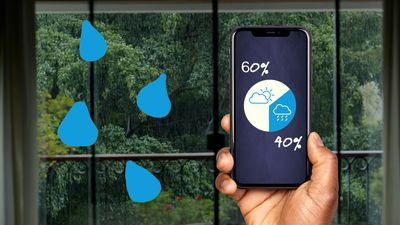
How NWP Powers Your Forecasts: Understanding Modern Weather Prediction
In a world increasingly dependent on reliable information, few predictions hold as much sway over our daily lives and critical decision-making as the weather forecast. From planning a picnic to navigating global supply chains, anticipating atmospheric conditions is paramount. But have you ever wondered about the sophisticated science that underpins these predictions, often delivered right to your smartphone? The answer lies largely in Numerical Weather Prediction (NWP), a technological marvel that has revolutionized our ability to peer into the atmosphere's future.
Modern weather forecasting is far more than an educated guess; it's a complex scientific discipline that integrates vast amounts of observational data with highly sophisticated mathematical models and immense computational power. This journey from raw atmospheric measurements to a probabilistic forecast involves a delicate dance between physics, computer science, and meteorology, constantly refined and improved. Understanding NWP is key to appreciating the power and limitations of the forecasts we rely on every day.
The Science Behind Your Daily Weather Forecast
At its core, a weather forecast aims to predict the state of the atmosphere at a specific time and place. This involves anticipating changes in key meteorological elements such as temperature, precipitation, humidity, wind speed and direction, and atmospheric pressure. While early attempts at prediction relied on simple observations and folklore, the mid-20th century marked a profound shift with the advent of scientific methodologies.
What is Weather, Anyway?
Weather, in scientific terms, describes the atmospheric conditions over a relatively short period—typically hours to weeks—at a particular location. It's the immediate, dynamic "personality" of the atmosphere, constantly fluctuating due to myriad interacting forces. This stands in stark contrast to climate, which describes the long-term average of these conditions over decades or longer. The very word "weather" traces its roots back to Old English and Proto-Germanic terms related to "wind" and "storm," reflecting humanity's ancient preoccupation with these dynamic states.
A crucial characteristic of weather is its inherent variability and chaotic nature. Tiny, unmeasurable changes in the atmosphere can, over time, lead to vastly different outcomes—a phenomenon often referred to as the "butterfly effect." This chaotic dynamic is precisely why long-range forecasts become progressively less certain, yet it also underscores the brilliance of NWP in taming this chaos to provide remarkably accurate short- and medium-range predictions.
From Observation to Prediction: The Forecasting Process
Before the digital age, forecasting was a labor-intensive process, largely reliant on synoptic meteorology—the manual analysis of weather charts based on sparse observations. Forecasters would draw isolines for pressure, temperature, and fronts, then extrapolate their movements. While effective for short-term predictions, this approach lacked the precision and global scope needed for truly advanced forecasting.
Modern weather forecasting begins with an unprecedented global observation network, feeding data into powerful computational models. These models then simulate the atmosphere's evolution based on fundamental physical laws. The output, a raw numerical prediction, is then interpreted and refined by meteorologists, often leveraging statistical post-processing techniques, to produce the user-friendly forecasts we consume daily.
Unpacking Numerical Weather Prediction (NWP)
Numerical Weather Prediction (NWP) is the cornerstone of contemporary weather forecasting. It's a method that uses mathematical models of the atmosphere and oceans to predict the weather by integrating current weather observations. Imagine the atmosphere as a vast, complex fluid governed by well-defined physical laws. NWP attempts to solve the equations that describe this fluid's motion, thermodynamics, and radiation over time.
The Pillars of NWP: Data Collection
The accuracy of any NWP model hinges on the quality and quantity of its initial data—the "snapshot" of the atmosphere at a given moment. Without a precise starting point, even the most sophisticated model will drift into error. This necessitates a global, continuous, and multi-layered observational system:
- Satellites: Orbiting high above Earth, satellites provide invaluable real-time global imagery and atmospheric soundings. Geostationary satellites offer continuous views of specific regions, crucial for tracking storms, while polar-orbiting satellites provide comprehensive global coverage, measuring temperature, moisture, and atmospheric composition across various altitudes.
- Doppler Radar: These ground-based systems detect precipitation, measure its intensity, and track the movement of storm cells. Crucially, Doppler radars can also detect wind patterns within storms, providing early warnings for severe weather like tornadoes and microbursts.
- Weather Balloons (Radiosondes): Launched multiple times a day from hundreds of stations worldwide, these balloons ascend through the atmosphere, transmitting crucial data on temperature, humidity, wind speed, and direction at different pressure levels. This provides vital upper-air profiles that cannot be easily obtained by other means.
- Surface Stations: Thousands of automated and manual stations across land and sea continuously record ground-level conditions like temperature, pressure, humidity, wind, and precipitation. Buoys in oceans and weather sensors on commercial aircraft further augment this rich dataset.
This immense volume of data, gathered from diverse sources, creates a three-dimensional picture of the atmosphere, serving as the essential input for NWP models.
Modeling the Atmosphere: Complex Algorithms and Supercomputers
Once the initial atmospheric state is established, NWP models get to work. These are not just simple equations but incredibly complex systems of differential equations that describe how the atmosphere changes over time. They account for everything from the Coriolis effect (due to Earth's rotation) to phase changes of water (evaporation, condensation, freezing).
The atmosphere is divided into a three-dimensional grid of points, both horizontally and vertically. The model then calculates the atmospheric variables (temperature, pressure, wind, etc.) at each grid point for a small time step, based on the physical laws and the influence of neighboring grid points. This process is repeated thousands of times, projecting the atmospheric state forward into the future.
Solving these equations for millions of grid points across the globe, repeatedly for many simulated hours or days, requires staggering computational power. This is where supercomputers come into play, performing quadrillions of calculations per second. Different types of models exist: global models cover the entire planet with a coarser grid, while regional models focus on specific areas with higher resolution, providing more localized detail. Ensemble forecasting, where multiple models or slight variations of a single model are run, helps quantify forecast uncertainty and improve overall accuracy by looking at a range of possible outcomes.
The Impact and Evolution of Modern Weather Forecasting
The advancements in NWP have transformed the utility and impact of the weather forecast across virtually every sector of society.
Why Accuracy Matters: Saving Lives and Billions
Accurate weather forecasts are more than just a convenience; they are a critical tool for public safety and economic resilience. The ability to predict extreme weather events—such as hurricanes, blizzards, floods, heatwaves, and severe storms—with greater lead time allows communities to prepare, evacuate, and mitigate damage. Early warnings save lives by giving people time to seek shelter or move out of harm's way.
Economically, the benefits are immense. Sectors like agriculture rely on forecasts for planting, irrigation, and harvesting decisions. Transportation (aviation, shipping, road freight) depends on forecasts for safe and efficient operations. The energy sector uses predictions for managing demand and supply, especially for renewable energy sources like wind and solar. Studies estimate that improved weather predictions reduce economic losses by billions annually, demonstrating "Why Accurate Weather Forecasts Save Lives and Billions Annually." The initial investment in observational infrastructure and supercomputing power is vastly outweighed by the returns in avoided damages and increased productivity.
From Nowcasting to Extended Ranges: Forecast Horizons
Modern forecasting offers a spectrum of predictive horizons, each serving different needs:
- Nowcasting (0-6 hours): Highly detailed, short-term forecasts, often used for immediate event planning or tracking fast-moving severe weather. Relies heavily on real-time radar and satellite data.
- Short-Range (1-3 days): The most common type of forecast, highly reliable for daily planning.
- Medium-Range (3-10 days): Provides a good indication of general weather patterns, useful for travel and outdoor event planning, though specific details like exact rainfall amounts become less certain.
- Extended-Range (10+ days to seasonal): Focuses on trends and probabilities rather than precise daily conditions, offering guidance for strategic planning in agriculture or resource management.
The inherent chaotic nature of the atmosphere means that predictability diminishes over time. While NWP has extended the useful range of forecasts significantly, there remains a fundamental limit to how far out we can accurately predict specific weather events.
The Future of Weather Prediction: AI and Global Collaboration
The continuous improvement of weather prediction is a global endeavor. Organizations like the World Meteorological Organization (WMO) play a crucial role in coordinating international data exchange, standardizing observations, and fostering collaborative research among national weather services. This global cooperation ensures that everyone benefits from shared knowledge and advanced modeling techniques.
Looking ahead, emerging technologies are set to propel weather forecasting into its next era. Artificial intelligence (AI) and machine learning (ML) are increasingly being integrated into NWP, promising enhancements in resolution, speed, and the ability to produce highly personalized forecasts. AI can identify subtle patterns in vast datasets, improve initial conditions, and refine model outputs, pushing the boundaries of what's possible. To learn more about this exciting progression, delve into "From Satellites to AI: The Evolution of Modern Weather Forecasting."
Practical tip: When interpreting a weather forecast, always consider the lead time. Short-term forecasts (1-3 days) are generally very reliable, while forecasts further out (7-10 days) should be viewed as general trends. For critical outdoor activities, always have a backup plan, and consult multiple reliable sources to get a comprehensive picture.
Conclusion
The journey from rudimentary observations to today's highly accurate weather forecast is a testament to scientific ingenuity and technological progress. Numerical Weather Prediction, with its intricate dance of global data collection, complex mathematical models, and supercomputing power, forms the invisible backbone of this capability. It's a system that constantly evolves, driven by international collaboration and breakthroughs in artificial intelligence, striving for ever-greater precision and longer lead times. As our understanding of the atmosphere deepens and our technological tools advance, the weather forecasts that empower our daily decisions will only become more sophisticated, continuing to save lives, protect economies, and inform our interaction with the dynamic world around us.